
Eduardo González
The Plurinational Parliamentary Group Sumar has asked the Government to bar companies operating or profiting from the Occupied Palestinian Territory from participating in public tenders. In its response, the Executive Branch asserted that Spanish and European legislation does not include direct or indirect participation in such activities as grounds for exclusion.
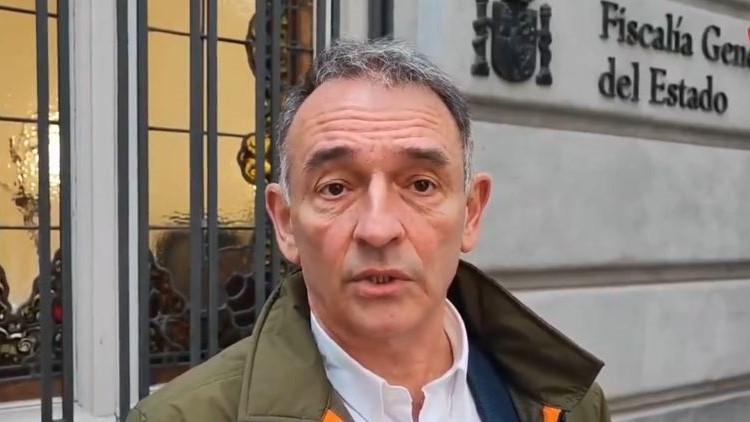
In a written question submitted on October 16 by MP Enrique Santiago of Izquierda Unida, the minority party in Pedro Sánchez’s coalition government points out that the UN Database on companies operating and profiting from the Occupied Palestinian Territory lists four companies headquartered in Spain: ACS, Construcciones y Auxiliar de Ferrocarriles (CAF), INECO, and SEMI.
Furthermore, it asserts that, according to the Report of the Special Rapporteur on the situation of human rights in the occupied Palestinian territories, what is happening in Gaza is a “genocide sustained by a system of occupation based on exploitation and economic profit” and that “companies from various sectors have contributed to and benefited from the destruction of Palestine.”
Sumar also points out that the protection of human rights “is a cornerstone of Spain’s foreign policy” and that the area known as “Business and Human Rights” is, “supposedly, one of the priorities of Spain’s foreign policy in all regions and countries of the world.”
For all these reasons, and taking into account the government’s stated position regarding Gaza, the party led by Vice President Yolanda Díaz asks the Executive Branch whether it will use, or modify, the public procurement law to prevent all companies registered in the United Nations Database from participating in public tenders, and whether it will exclude them from any benefits, international promotion, subsidies, etc., from the public sector.
Sumar also asks the Government what other types of measures it will undertake to ensure that these companies registered in the Database cease their activities in service to the Israeli occupying power.
In response to this parliamentary question, registered on November 21 and published this Monday, December 1, in the Official Gazette of the Spanish Parliament (BOCG), the Government asserts that the regulations governing the grounds for exclusion from public procurement procedures are set out in Article 71 of the Public Sector Contracts Law (LCSP), which transposes into Spanish law the provisions of Article 57 of the 2014 European Directive regulating the grounds for excluding economic operators from procurement procedures.
“These articles, both of the Directive and the LCSP, do not mention direct or indirect participation in activities such as those mentioned in the initiative as a cause for exclusion,” the Executive states. Furthermore, and in accordance with the Supreme Court and the Constitutional Court, “to apply a prohibition on contracting, there must be an express legal provision” and “the affected party’s right to defense must be guaranteed through a hearing in the procedure for determining the prohibition on contracting.”