
The Diplomat
The Secretary of State for International Cooperation, Ángeles Moreno Bau, informed the Congress yesterday that the embezzlement perpetrated over ten years by a former accountant of the Technical Cooperation Office (TCO) in Panama amounts to at least five million euros. She also assured that the Ministry of Foreign Affairs has reviewed and reinforced the accounting systems in the rest of the AECID delegations and has not detected “any notable problems”.
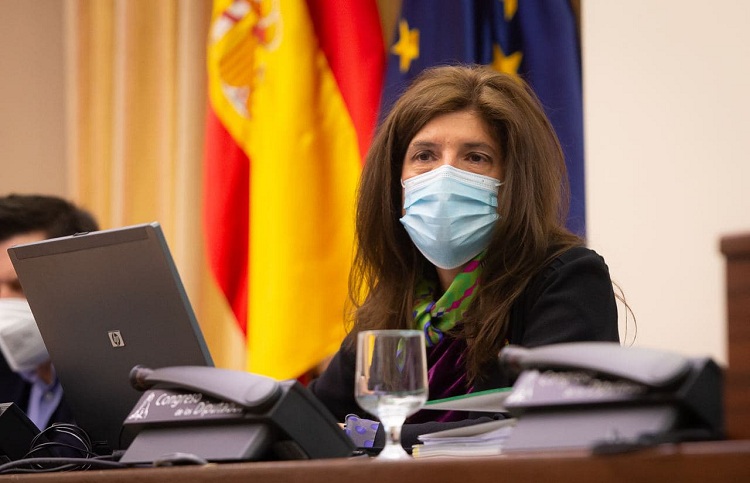
Moreno Bau clarified these details during her appearance before the Committee on International Development Cooperation to explain, at her request, the activities of the Secretary of State for International Cooperation and the reform of the International Development Cooperation system, and to clarify, at the request of Vox, the “case of corruption affecting the AECID in its delegation in Panama”.
During her speech, the Secretary of State reiterated the same details that the Government had already provided last September in a written parliamentary response on this matter. Specifically, Moreno Bau recalled that the embezzlement was detected in February 2020, “due to the unjustified absence of the accounting administrator of the AECID Technical Cooperation Office in Panama”, the Panamanian citizen Omar Guevara.
According to the parliamentary response, the general coordinator of the TCO had been interested in a pending transfer of funds from an AECID account to the beneficiary of a water programme, Programa de Agua Potable y Saneamiento en Áreas Rural e Indígena de Panamá con Énfasis en la Gestión Local (Drinking Water and Sanitation in Rural and Indigenous Areas of Panama with an Emphasis on Local Management). After contacting the bank, he was told that the balance in the account was only USD 1,974.91. Subsequently, the coordinator brought these facts to the attention of the AECID, the Agency informed Moreno Bau on 20 February, and finally, the secretary of state informed the minister, Arancha González Laya, and the Ministry’s General Inspectorate of Services.
According to Moreno Bau, as soon as the facts became known, the Ministry instructed the Spanish Embassy to file a complaint with the Panamanian Public Prosecutor’s Office, after which the ambassador, Francisco Javier Pagalday Gastelurrutia, informed the Panamanian government and the Panamanian attorney general of the facts and ordered, on 21 February, the suspension of the accused from employment and salary. Seven days later, a complaint was filed with the Panamanian Public Prosecutor’s Office and on 3 April, the Panamanian Attorney General issued a search and arrest warrant for the administrative accountant.
In addition, in mid-March, a mission from the General Inspectorate of Services and the Control and Management Improvement Division of the Spanish Ministry of Foreign Affairs travelled to Panama and drew up a report, which was sent to the Court of Auditors on 8 June. That same month, after hiring a Panamanian law firm, the AECID filed a complaint in Panama and “appeared as injured party”. The complaint was signed by the ambassador, representing AECID, on 11 June.
“At the moment, the investigation is still underway”, said Moreno Bau, who pointed out that the accused has not yet been arrested and that the amount stolen, “over ten years and with different governments”, amounts to five million euros. However, she warned, “it is not the final figure” because some cheques issued by the former accountant have yet to be verified.
The Secretary of State also reported that, in order to “minimise similar risks”, the Ministry launched in March 2020 “a procedure for circularisation and confirmation of cash balances” of all the TCOs, which concluded in June and which did not detect “any notable problems” in the other 49 offices. In addition, over the last year, bank audits have been reinforced and accounting controls of the funds managed by the AECID have been carried out, as well as “periodic cash audits”. In any case, she added, the Panama embezzlement is “a totally isolated and exceptional case” that reflects “how important it is to promote ambitious reforms” to prevent public funds from falling “down the drain”.