Eduardo González
Japan has been able to use “its very rich cultural projection” to increase its external influence in the world and develop a model of cultural diplomacy “from which it would be very interesting to learn”, according to the Elcano Royal Institute.
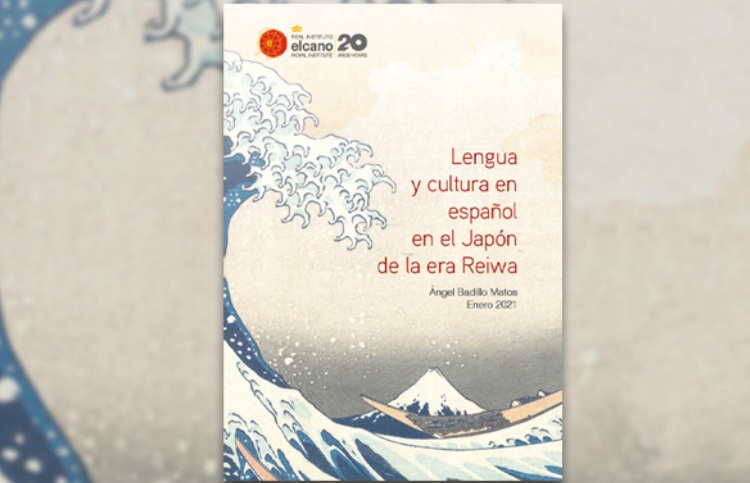
“Japan is a soft power with super powers, and those super powers are cultural”, said Angel Badillo, researcher at the think tank and main author of the report Language and culture in Spanish in Japan in the Reiwa era, which was presented yesterday by telematic means. The study, prepared by the Elcano Royal Institute and the Instituto Cervantes with the collaboration of. IAG-Iberia, analyzes in depth the situation of the language and culture in Spanish in Japan today, specifically in the Reiwa era, which began in May 2019 with the accession to the throne of the current emperor, Naruhito. Yesterday’s event marked the last public participation of Emilio Lamo de Espinosa as president of the Elcano Royal Institute, a position he will relinquish today to economist José Juan Ruiz Gómez.
“Japan has been able to use its very rich cultural projection to project its external influence in the world”, explained Badillo. In this mixture of “external projection and cultural diplomacy”, he continued, “Japan has no qualms about recognizing itself in popular culture, in anime or manga, to increase its image as a cool, attractive country”, he explained. “The Japanese government has found in the rise of Japanese popular culture in the world an instrument of soft power that was not initially part of its cultural policies. This is a strategy from which it would be very interesting to learn”, he warned.
Besides, according to Badillo, one of the main weaknesses of our country’s foreign policy in Japan, and in Asia in general, is the lack of “presence of Spanish cultural diplomacy”. “Relations between Japan and Spain are very good in speeches, but they lack forcefulness when they approach the specifics”, he warned. “They are two societies very interested in each other, Spain has an excellent image in Japan”, but, apart from the “great work done by the Instituto Cervantes”, the Spanish language has “difficulties to penetrate” in the country, where the teaching of our language is “irrelevant in the education system”, he lamented. “That there are more students of German and French in Japan than of Spanish is surprising, if we take into account the importance of our language and Japan’s relations with Spanish-American countries,” he added.
In the same vein, the director of the Instituto Cervantes, Luis García Montero, admitted that, despite the fact that more than 200 Japanese universities teach Spanish, the Castilian language “is very far from occupying the space that corresponds to its importance in the world, not only for its demographic weight but also for its importance in the world of politics, communication, sports and, of course, culture”. “That is why it is so important for the Institute to promote our language and culture in Japan hand in hand with the family of Spanish-speaking countries”, he said.
For his part, Víctor Ugarte, director of the Instituto Cervantes in Tokyo, explained that the motivations of the Japanese to study Spanish are more related to their sympathy for Spain and its culture, tourism and sports than to economic reasons, unlike what happens in China. In spite of this, the teaching of Spanish in Japanese schools is “practically non-existent”, which is linked to the decline that the teaching of Spanish, French, German and other European languages is experiencing in the Asian country due to the growing interest of the Japanese authorities in promoting the teaching of English to the detriment of the rest.